
Giving frontier innovation commercial shape

London, UK

BBC Research & Development

Giving frontier innovation commercial shape

Commercial PartnershipsremoveProposition Developmentremove

BBC Research & Development has spent nearly a century shaping the technological substrate through which Britain, and much of the world, watches and listens.

Its work helped pioneer colour television, NICAM stereo and digital radio. It also influenced the standards behind high-definition broadcasting. Few research teams have done more to turn experimental media technology into public infrastructure.

Moving Brands partnered with BBC Research & Development to shape five emerging technology opportunities into propositions that leading partners could understand, invest in and help scale.
The gap between invention and adoption

The UK’s creative industries contributed £145.8bn in Gross Value Added (GVA) in 2024, growing at more than four times the rate of the wider economy. Holding that advantage will depend partly on the technologies that shape how content is trusted and valued, and how audiences experience it.

But promising research does not become market infrastructure on technical merit alone. Partners need to see a credible route from idea to adoption.

BBC Research & Development was exploring five opportunities across trust in content, immersive experiences and IP for the creative economy. The ideas were technically rich. Commercially, they were still nascent.

Some were difficult for partners to grasp quickly. Others needed a clearer link between public value, reach, technical feasibility and revenue potential. Without that framing, they risked remaining promising research rather than propositions partners could back.

A future partners could back

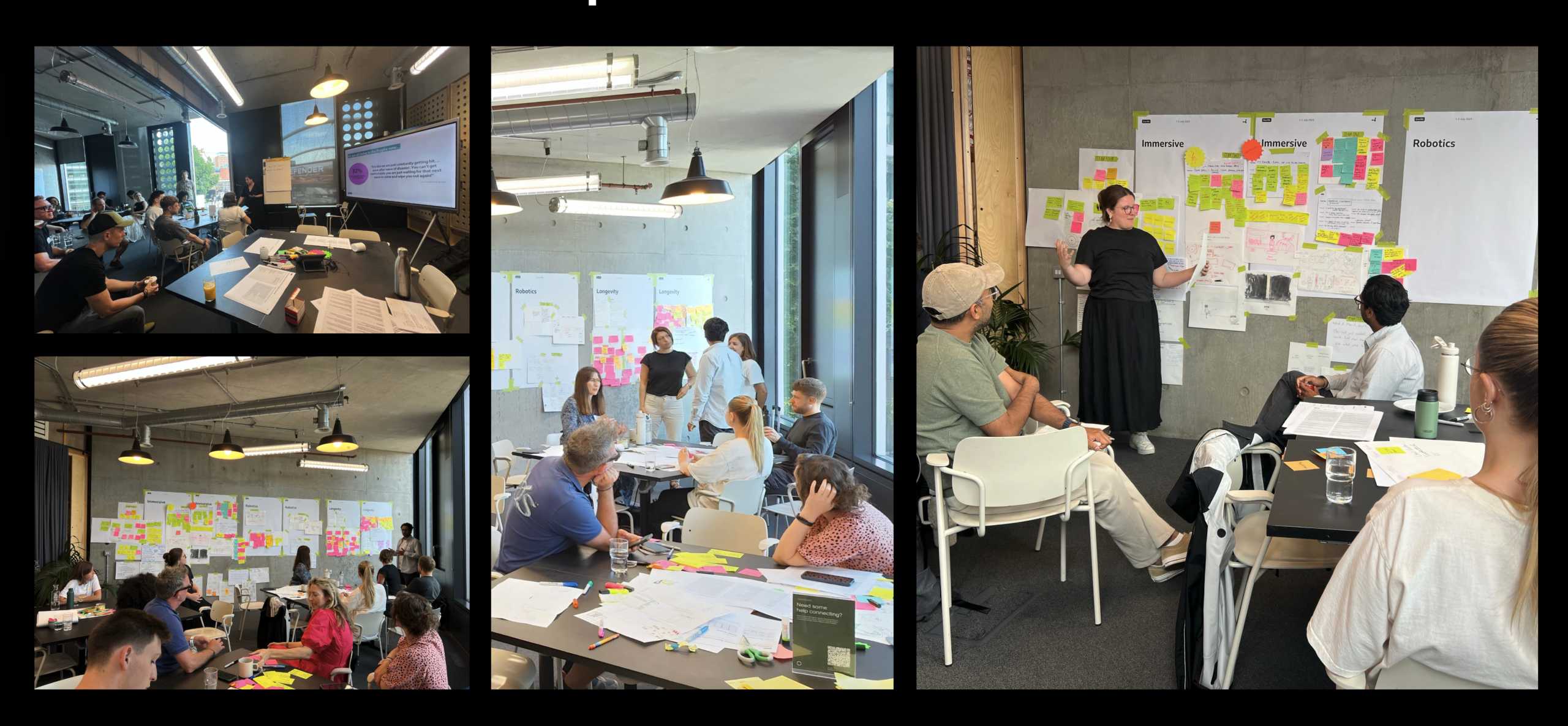
A focused strategy sprint brought BBC Research & Development’s propositions team together with more than 20 experts to test and extend five opportunity areas.

We moved each idea out of abstract innovation territory and into a more tractable form. Workshops, cross-industry references and rapid visualisation made the opportunities tangible.

Each proposition gained the commercial logic partners needed: a defined problem, a credible audience, a plausible model and a clear reason to act. The result was a sharper set of partner-ready propositions for companies working at the edge of technology.